
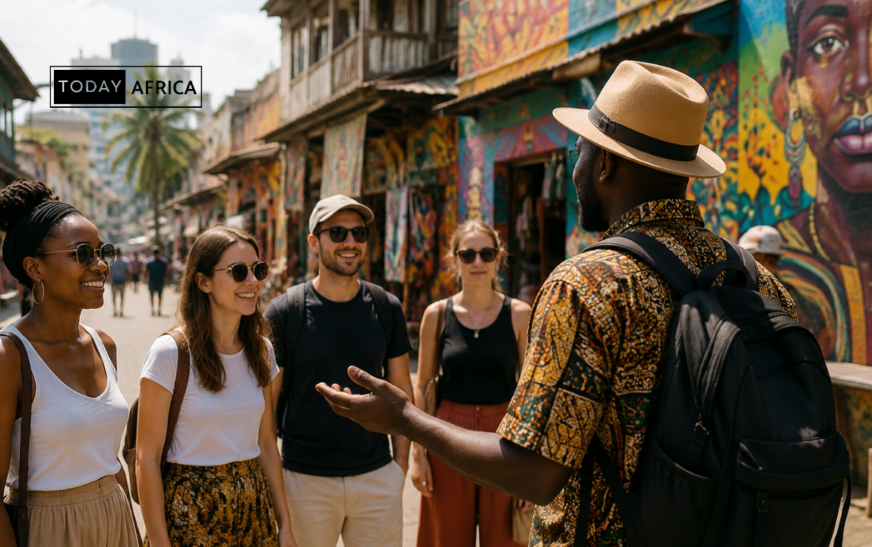
A group of visitors walks behind a local guide wearing a simple branded shirt, stopping at old colonial buildings, street-art walls, fishing communities, and small food spots that most traditional tour buses rarely reach.
The guide is not just explaining history.
He is filming short videos, answering questions from travelers online, recommending local businesses, and building a digital audience that extends far beyond the people walking beside him.
The experience continues long after the tour ends. This is becoming a new pattern across African cities. Local tour guides are no longer only service providers who meet travelers at airports, hotels, or historical sites.
Many are becoming digital travel entrepreneurs, creating online brands that influence where people go, what they experience, and how they understand African destinations.
The new African traveler is discovering places through people
Travel decisions are changing. For years, many visitors discovered African destinations through traditional travel agencies, international guidebooks, and hotel recommendations.
Today, travelers increasingly follow people.
A local guide explaining the history of a neighborhood on TikTok can influence a trip just as much as a luxury hotel advertisement. A food tour creator showing a family-owned restaurant can send visitors into areas that previously received little tourist attention.
This shift is especially visible among younger travelers, diaspora visitors, remote workers, and experience-focused tourists.
The form you have selected does not exist.
They are not only looking for landmarks; they want access. And they want someone who understands the rhythm of a city, where locals eat, where artists gather, where entrepreneurs are building businesses, and where cultural experiences happen outside standard tourism routes.
Local guides are filling that gap. The guide is becoming more than a person holding a flag at a tourist attraction. The guide is becoming a trusted local brand.
Read also: What makes a city attractive for tourism investment?
Why local tour guides are moving into digital branding

The growth of digital travel brands is not happening by accident. Several forces are changing how people move across Africa.
Rise of social media-driven discovery
Platforms such as Instagram, TikTok, YouTube, and travel communities have turned destinations into digital conversations.
Travelers often research places months before booking flights. They follow creators, save recommendations, and build itineraries from online content.
For local guides, this creates an opportunity. A guide who once depended on hotel partnerships or word-of-mouth referrals can now reach international audiences directly.
The changing African travel market itself
Africa’s tourism industry is becoming more connected to business travel, diaspora movement, events, and lifestyle experiences.
Travel is no longer only about vacations. People are moving for conferences, startup events, music festivals, investment opportunities, family reunions, remote work, and cultural reconnection.
This creates demand for local experts who can help visitors navigate cities beyond hotels and conference centers.
A business visitor attending a technology event in Nairobi may want a founder community tour. Local guides are increasingly packaging these experiences.
Read also: Why food tourism could become a major growth market in Africa
Africa’s cities are becoming experience economies
The rise of digital travel brands reveals something larger about African cities. Destinations are no longer competing only through beaches, wildlife, or historical attractions.
They are competing through identity. A city’s culture, people, food, creativity, and entrepreneurial energy are becoming part of its tourism infrastructure.
Accra’s growing popularity among diaspora travelers is connected not only to beaches and heritage sites but also to cultural events, creative industries, and the city’s role as a meeting point for global Africans.
- Lagos attracts visitors through its blend of entertainment, business, fashion, technology, and nightlife.
- Nairobi increasingly blends tourism with innovation, conservation, and startup ecosystems.
- Cape Town continues to attract international visitors through hospitality, design, wine tourism, nature, and creative industries.
These destinations show a broader transformation: African travel is becoming more experience-driven. Travelers want stories they can participate in. They want relationships with places, not just photographs of them.
Local guides are becoming important because they provide the human connection that large tourism systems often struggle to create.
As travel entrepreneurs and guide communities often emphasize, “People do not only remember where they went. They remember who helped them understand the place.”
That human element is becoming a competitive advantage.
Digital travel brands are creating new business opportunities
The business opportunity around local travel brands extends beyond tours. A successful digital guide can create an ecosystem.
A creator who builds trust online can partner with hotels, restaurants, transportation companies, event organizers, and cultural institutions.
They can develop travel packages, sell digital guides, create membership communities, host diaspora experiences, and attract corporate visitors.
This is particularly important as African cities experience increased investment in the hospitality sector. More hotels, short-term rentals, restaurants, coworking spaces, and lifestyle businesses are emerging as people travel differently.
Visitors increasingly want personalized recommendations rather than generic tourism packages. This creates opportunities for entrepreneurs who understand both culture and technology.
- A local guide with strong digital skills can become a destination marketer.
- A restaurant owner can collaborate with travel creators to reach international customers.
- A hospitality business can use local storytellers to communicate authentic experiences.
- An investor can identify emerging neighborhoods by studying where travelers, creators, and businesses are beginning to concentrate.
Travel intelligence is increasingly about understanding human movement.
Where people gather, why they gather, and what businesses grow around those movements.
Read also: Inside Lagos’ hospitality boom: Hotels, restaurants, and the business of movement
The diaspora is becoming a major audience for African travel brands

One of the most significant trends shaping African tourism is diaspora travel.
Millions of Africans living abroad are increasingly returning for holidays, cultural experiences, family connections, business opportunities, and investment exploration.
Many diaspora travelers are not searching for traditional tourism. They are searching for belonging. They want to understand the neighborhoods their families came from.
The form you have selected does not exist.
And they want local experiences that connect them to history and identity. They want trusted people who can guide them through cities they may know emotionally but not practically.
This creates a major opportunity for local travel brands. A guide who understands storytelling, heritage, and digital communication can serve a global audience. The opportunity is not limited to tours.
It includes cultural education, relocation experiences, investment tours, business networking, and community-based travel.
As African cities continue attracting global attention, local voices will play a larger role in shaping how those cities are experienced.
What this means for African entrepreneurs and investors
The rise of digital travel brands signals a new phase in Africa’s tourism economy. The future winners will not be limited to large hotels or traditional travel companies.
They will also include individuals and small businesses that understand attention, trust, and local knowledge.
- For entrepreneurs, the opportunity is clear: build experiences around what makes a place unique.
- For hospitality businesses, partnering with local creators can become a powerful marketing strategy.
- For investors, digital travel communities may reveal where demand is growing before traditional reports capture the trend.
- For diaspora Africans, these platforms offer easier ways to reconnect with the continent through trusted local networks.
- For creators, travel storytelling has become a business opportunity.
The next generation of African travel brands will likely come from people who combine culture with technology.
They will not simply show visitors where to go; they will also shape how the world understands African cities.
Read also: Why Kigali is becoming one of Africa’s most strategic business travel cities
Local storytellers will build the future of African travel
Africa’s tourism future is being influenced by people who know their communities from the inside.
- The local guide filming a neighborhood walk.
- The creator documenting food culture.
- The entrepreneur building a digital travel community.
- The storyteller connecting visitors with businesses.
Together, they are creating a new layer of tourism infrastructure, one built on trust, culture, and digital influence.
Understanding these movements requires more than looking at visitor numbers. It requires understanding the people driving the change.
For organizations looking to identify opportunities, understand emerging ecosystems, or increase visibility, services such as Market Intelligence Studio and the Founder & Ecosystem Visibility Engine provide tools to track Africa’s evolving business and innovation landscape.
The future of African travel will not only be defined by where people go. It will be defined by who helps them understand why those places matter.
The form you have selected does not exist.
Leave a comment and follow us on social media for more tips:
- Facebook: Today Africa
- Instagram: Today Africa
- Twitter: Today Africa
- LinkedIn: Today Africa
- YouTube: Today Africa Studio




![15 Best Beaches in Morocco to See This Year [& Essential Packing List]](https://todayafrica.co/wp-content/uploads/2023/12/Blue-Simple-Dad-Appreciation-Facebook-Post-1200-×-720-px-6-9.png)