
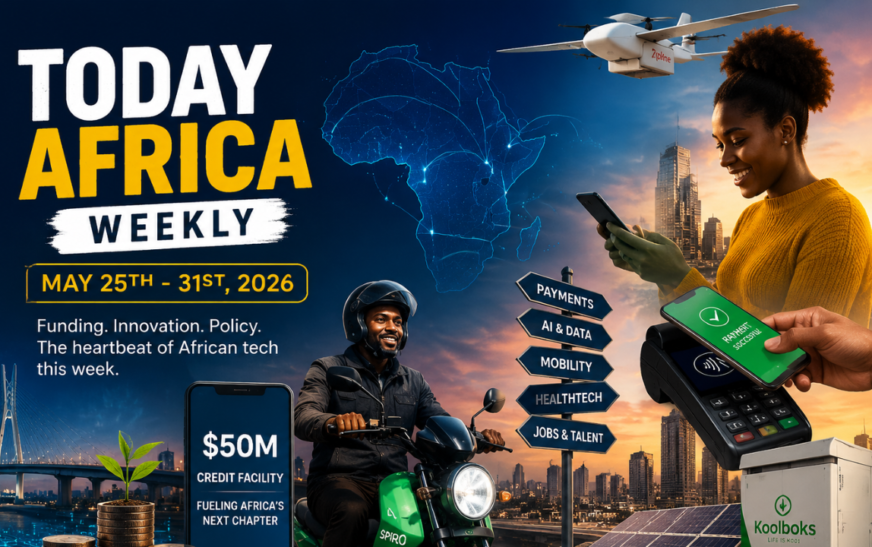
The week of May 25th – 31st, 2026, was not just about big announcements. It was about control. Who controls payments, data, digital infrastructure, and the future of African jobs?
Across Nigeria, Kenya, Ghana, South Africa, and pan-African corridors, the strongest stories all pointed in one direction: African tech is moving deeper into real infrastructure, and regulators are moving closer behind it.
African tech news
Kenya wants a $21 million social media monitoring system
Kenya opened the week with one of the more politically sensitive tech stories on the continent. The government requested KSh 2.7 billion (about $21 million) to build an AI-powered system to monitor online public sentiment. The proposal includes social media sentiment analysis tools, upgrades for government communication offices, and a National Communication Center designed to coordinate official messaging.
The official language is about misinformation, disinformation, and public communication. The public concern is about surveillance. Kenya has one of Africa’s most active digital rights communities, and the memory of the 2024 Finance Bill protests still hangs over every government move involving X, TikTok, and online mobilization.
For founders, activists, creators, and ordinary users, the story is bigger than software. It is about how governments plan to manage online speech in a country where the internet has repeatedly shaped national politics.
Nigeria’s banking rails face another trust test
Nigeria’s digital payments infrastructure had another uncomfortable week after Techpoint reported that the Nigeria Inter-Bank Settlement System went to court over a ₦13.66 billion glitch.
The problem reportedly began in September 2024, when a fault on the Nigeria Instant Payment platform caused funds to be credited to accounts without the corresponding debit.
The case matters because NIBSS sits at the center of bank transfers, fintech payouts, and PoS transactions in Nigeria. When that system works, millions of people move money instantly without thinking about the machinery behind it.
When it fails, trust becomes the bill everyone has to pay. The glitch reportedly affected 176 accounts across 19 banks and microfinance institutions, and NIBSS is now seeking account freezes, reversals, liens tied to BVNs, and other recovery measures.
Ghana stops MTN’s MoMo fee before it starts
Ghana delivered one of the week’s clearest examples of regulator speed. MTN Ghana planned to introduce a 0.75% charge on MoMo-to-bank transfers, capped at GHS 5, beginning June 1. Before customers could even properly finish complaining online, the Bank of Ghana stepped in and ordered MTN’s mobile money subsidiary to suspend the fee pending consultations.
That fast intervention tells us two things. First, mobile money is too politically sensitive for surprise pricing changes. Second, African regulators are becoming more willing to intervene when they believe digital finance operators are moving ahead without enough consumer protection. Ghana’s painful E-Levy history also made the timing explosive. Even a small fee can sound like a tax comeback tour when citizens already feel overcharged.
CashAfrica wants Nigerians to tap instead of transfer
In Nigeria, CashAfrica is betting that the next payment habit could be contactless. The startup is building infrastructure to help banks and fintechs offer tap-to-pay services in a market still dominated by cash, transfers, cards, and USSD. Its co-founders, Malik Asamu and Bello Opeyemi, want contactless payments to become as normal as asking, “Cash or transfer?”
CashAfrica has already worked with PalmPay on tap-to-pay functionality across 1,000 POS terminals and is using a ChamsSwitch partnership for switching and settlement. The company says more than ₦2 billion has been processed through its infrastructure since launch. The real challenge is not speed. Tap-to-pay is fast. The harder job is changing merchant behavior in a country where bank transfers have become deeply embedded in daily commerce.
Kenya moves to punish bad telecom service
Kenya’s Communications Authority is preparing tougher rules for telecom operators that deliver poor network quality. The proposed rules would raise the minimum quality-of-service score from 80% to 90% and introduce county-level enforcement. That means telcos would no longer be able to hide weak rural performance behind stronger service in Nairobi or Mombasa.
This could mark a major shift in consumer protection. Mobile internet now supports banking, online learning, remote work, streaming, logistics, and small business activity across Kenya. Yet rural and peri-urban areas still deal with dropped calls, weak connections, and unreliable data.
Under the proposed model, poor service in a specific county could attract direct penalties there. For startups depending on mobile connectivity, this is not just a telecom story. It is a market access story.
Meta’s paid internet era reaches African businesses
Meta officially pushed deeper into subscriptions with paid plans for Facebook, Instagram, and WhatsApp under the Meta One umbrella. The apps remain free, but users can now pay for extra features, visibility, AI tools, and premium experiences. For African creators and small businesses, this is bigger than app decoration.
Across Lagos, Nairobi, Accra, Johannesburg, and Kigali, social platforms are storefronts, sales channels, customer service desks, and community engines. If Meta begins selling visibility, analytics, creator growth tools, and AI features more aggressively, online business costs may rise.
Some creators and SMEs will treat subscriptions as marketing expenses. Others may find themselves priced out of the very platforms they helped make commercially valuable.
Spiro buys Coexlion and gets more serious about African EV engineering
E-mobility company Spiro acquired Coexlion, a UK-based engineering and design consultancy focused on two-wheelers and electric vehicles. The acquisition is designed to help Spiro build its first African research and development center in Nairobi. That is a strategic move, not just a trophy purchase.
For years, many African EV startups have operated as assemblers or distributors of imported technology. Spiro appears to be moving toward deeper control of product design, engineering, and local adaptation. That matters because African motorcycles operate under different road, weather, and rider conditions than vehicles designed for Europe or Asia.
With over 80,000 electric motorcycles deployed and more than 2,500 battery swap stations across the continent, Spiro is now building the technical backbone to support its scale.
Zipline turns Nigeria into a national logistics bet
Zipline is preparing a major expansion in Nigeria. The drone logistics company plans to add 12 new distribution centers, growing from three operational hubs to 15 facilities nationwide. The goal is to serve up to 20,000 health facilities and reach nearly 100 million Nigerians by 2028.
This marks a shift from pilot projects to national infrastructure. Zipline has already operated in Kaduna, Cross River, and Bayelsa, but the company now wants to adopt a broader, federal-scale model. Healthcare remains the core focus, with drones delivering vaccines, medicines, blood, anti-venom, and other essential supplies. Yet the stronger possibility is that Zipline’s logistics network could later support agriculture, animal health, e-commerce, and broader supply chain use cases.
Africa’s outsourcing market gets fresh attention
TechCabal reported that South Africa, Nigeria, and Kenya have emerged as Africa’s leading destinations for business process outsourcing. South Africa ranked highest on the continent, followed by Nigeria and Kenya. These markets are benefiting from global demand for customer service, AI training, data annotation, content moderation, and back-office support.
This trend deserves more attention because it connects African tech talent to global service demand without requiring every company to become a venture-backed startup. Kenya’s BPO sector is already active in AI training, digital marketing, customer support, and content moderation.
Nigeria brings scale and English proficiency. South Africa brings stronger infrastructure and a more mature services market. The opportunity is large, but it will also raise fresh questions about labor standards, wages, and worker protection.
Key funding rounds (May 25th – 31st, 2026)
| Startup or fund | Country | Sector | Amount | Round or capital type | Lead investor or provider |
| NALA | Pan-African, with strong East African corridors | Fintech, payments, stablecoin infrastructure | Up to $50 million | Non-dilutive credit financing | Liquidity through Mars Growth Capital, a joint venture with MUFG Bank |
| Mia Healthcare Technologies | South Africa | E-health, dental care, orthodontics | ZAR15 million, about $920,000 | Growth funding | Vumela Fund, managed by Edge Growth |
| Africa Jobs Fund | Pan-African | Jobs, export manufacturing, labour mobility | Targeting $100 million over five years | Philanthropic investment fund | Led by Daniel Yu and housed at Renaissance Philanthropy |
| Accelerate Africa | Pan-African | Startup accelerator, early-stage support | Potential $250,000 to $500,000 optional investments after demo day | Programme pipeline | Accelerate Africa Fund and Future Africa |
| MEST AI Startup Programme | Ghana, Nigeria, Senegal, Kenya focus | AI startup training and incubation | Up to $100,000 potential pre-seed investment for top ventures | Startup programme pipeline | MEST |
NALA takes the week’s biggest disclosed capital raise
NALA secured up to $50 million in credit financing to support global expansion, product development, and the build-out of its next-generation neobank.
The financing is provided by Liquidity through Mars Growth Capital and is structured as non-dilutive credit. An initial $25 million facility comes with a scale-up option of at least $50 million.
This is one of the clearest signs that African payments companies are no longer raising only to chase users. They are raising to support liquidity, settlement, compliance, and infrastructure.
NALA operates across major remittance corridors linking the UK, US, and Europe to African markets, including Tanzania, Kenya, Rwanda, Uganda, and Ghana. The company’s stablecoin infrastructure angle also reflects a broader shift in cross-border payments: speed matters, but working capital matters even more.
Mia Healthcare raises $920,000 for affordable dental care
South African e-health startup Mia Healthcare Technologies raised ZAR15 million ($920,000) from the Vumela Fund. The company is working to make dental and orthodontic care more accessible through mobile and fixed dental practices, locally produced clear aligners, and a care model designed around affordability.
This is not the loudest funding story of the week, but it is one of the more practical ones. Dental care often sits outside the glamour zone of African healthtech, yet cost and location remain major barriers for millions of people. Mia’s raise shows investor interest in health models that combine local manufacturing, service delivery, and consumer affordability.
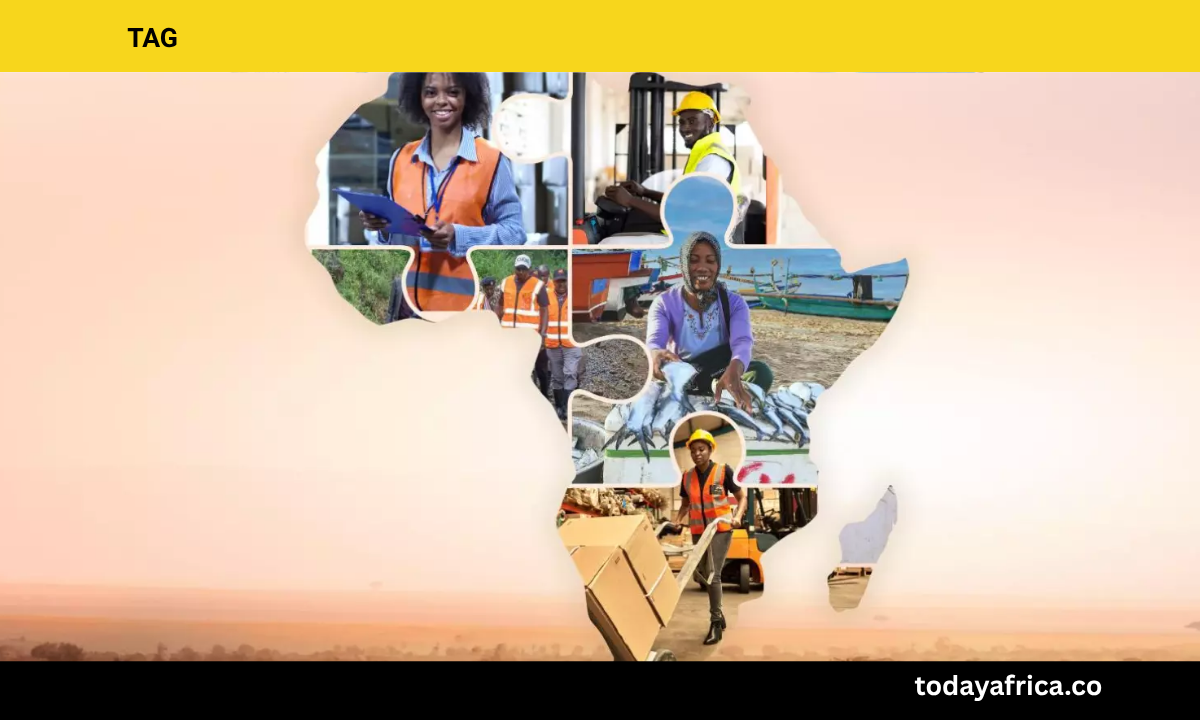
Africa Jobs Fund aims to address the employment gap
Daniel Yu, co-founder of Wasoko, launched the Africa Jobs Fund with a plan to mobilize $100 million over five years. The fund, housed at Renaissance Philanthropy, aims to support companies that create high-productivity jobs across Sub-Saharan Africa. Its core focus areas are export manufacturing and international labor mobility.
This is not a normal startup funding round, but it is one of the most important capital stories of the week. African startup ecosystems have celebrated funding, unicorns, and apps for years, but formal job creation has not kept pace with population growth. Africa Jobs Fund is making a blunt argument: the next decade needs companies that put people to work at scale, not just companies that look exciting in pitch decks.
Accelerators keep filling the early-stage pipeline
Disrupt Africa reported that applications for the fifth Accelerate Africa program opened. The 12-week program will select 10 startups and support them across storytelling, operations, go-to-market strategy, product development, and fundraising. It does not take equity at admission, but founders may receive optional investment offers after the November demo day.
MEST also opened applications for the second edition of its AI Startup Program. The fully funded program is hosted in Accra and targets African founders in Ghana, Nigeria, Senegal, and Kenya. The strongest ventures can access incubation and pitch for up to $100,000 in pre-seed investment. This is important because African AI needs more than enthusiasm. It needs structured founder training, technical support, and early capital.
Noteworthy stories
Koolboks shows how climate hardware can scale quietly
Disrupt Africa profiled Koolboks, the pan-African solar refrigeration startup that has deployed more than 10,000 units across Nigeria, Kenya, and Uganda since 2021. The company builds solar-powered refrigerators and freezers for off-grid and weak-grid communities, targeting small businesses and healthcare facilities.
The model is useful because it solves a very ordinary but expensive problem: keeping goods cold where power is unreliable. Koolboks also uses PAYG financing, IoT-enabled device management, and a BNPL platform for other appliances. This is the kind of climate tech that doesn’t need big speeches to prove its relevance. Spoiled fish, wasted vaccines, and melting inventory already make the case.
Ghana’s MoMo fee fight shows the politics of digital finance
MTN Ghana’s suspended fee may look small on paper, but it shows how politically charged mobile money pricing has become. For millions of users, MoMo is not a luxury product. It is part of daily survival, business, savings, family support, and informal commerce.
The Bank of Ghana’s intervention also sends a message to other telecoms and fintechs. Digital finance companies may need to involve regulators earlier before introducing customer-facing charges. In markets still recovering from unpopular transaction taxes, even a capped fee can quickly become a national argument.
Nigeria’s PoS rules get more flexible
TechCabal reported that Nigeria’s central bank expanded the allowed operating radius for PoS terminals from 10 meters to 70 meters. The regulator also extended the enforcement deadline for the geofencing policy to August 1, 2026. The move gives operators more time and space to comply with rules originally designed to reduce fraud and improve traceability.
This matters because PoS agents have become essential to Nigeria’s cash economy. A strict 10-meter rule may have looked neat inside a circular, but real markets are messy. A 70-meter radius gives agents and merchants more room to operate, even as the central bank continues pushing for location tracking and tighter compliance.
Trends to Watch
Infrastructure is still the money magnet
The biggest capital story of the week was NALA’s $50 million credit facility, and the most strategic acquisition story was Spiro buying Coexlion. Both point toward the same trend. Investors and operators are prioritizing infrastructure over hype.
Payments infrastructure, EV engineering, drone logistics, contactless payment rails, solar refrigeration, and BPO talent pipelines all showed up strongly this week. The market is rewarding companies that solve hard operating problems, not just companies with glossy user interfaces.
Fintech remains powerful but more regulated
Fintech was everywhere this week. NALA raised debt capital. Ghana halted MTN’s MoMo fee. Nigeria’s PoS rules changed. CashAfrica pushed contactless payments. NIBSS went to court over a major transaction glitch. MTN, Airtel, and Glo entered the airtime lending market under regulatory pressure.
That tells us fintech is still the center of African tech gravity, but it is also the sector facing the heaviest scrutiny. Regulators are watching fees, location data, consumer protection, fraud, lending rules, and transaction reliability. Founders building in fintech now need compliance strength as much as product speed.
Kenya is becoming Africa’s policy pressure cooker
Kenya appeared repeatedly this week: social media monitoring, telco quality fines, EV market activity, BPO growth, and AI-related labor opportunities. The country remains one of Africa’s most important startup markets, but it is also becoming a test ground for how governments regulate digital infrastructure.
The hard question is how far the state can go without weakening the same digital economy it wants to tax, monitor, and control. For founders, Kenya remains attractive, but policy risk is now part of the market map.
AI is moving into products, policy, and labor markets
AI showed up through MEST’s startup program, Meta’s paid AI subscriptions, Kenya’s proposed social media monitoring system, and Africa’s growing BPO role in AI training and data annotation. That mix tells a fuller story than the usual AI hype.
Africa’s AI future will not only come from founders building chatbots. It will also come from governments buying monitoring systems, platforms charging for AI features, workers labeling data, and accelerators training founders to build real products. The question is who captures the value, and who simply does the invisible work behind it.
Climate and mobility are becoming industrial stories
Koolboks, Spiro, Zipline, and Mia Healthcare all sit in different sectors, but they share a common pattern. They combine technology with physical operations. That makes them harder to scale, but also harder to dismiss.
The next wave of African tech winners may look less like lightweight apps and more like companies that own hardware, logistics, energy systems, clinics, vehicles, or specialized infrastructure. That shift changes the capital stack, too. More debt, more blended finance, more strategic investors, and more patience may be required.
Conclusion
May 25th – 31st, 2026, was a week when African tech came of age in public. The easy version of the ecosystem is that startups raise money, users download apps, and everyone claps. The real version is messier. Regulators intervene.
Payment systems glitch. Governments monitor platforms. Founders chase liquidity. Hardware companies buy engineering capacity. Health and logistics companies build infrastructure one painful market at a time.
The strongest signal from the week is that African tech is becoming more serious because the problems are. Payments, healthcare logistics, job creation, connectivity, digital rights, and energy access are not side quests.
They are on the main road. The founders and investors who win this next phase will be the ones who understand that the continent does not need more noise. It needs systems that work when nobody is clapping.
Leave a comment and follow us on social media for more tips:
- Facebook: Today Africa
- Instagram: Today Africa
- Twitter: Today Africa
- LinkedIn: Today Africa
- YouTube: Today Africa Studio